
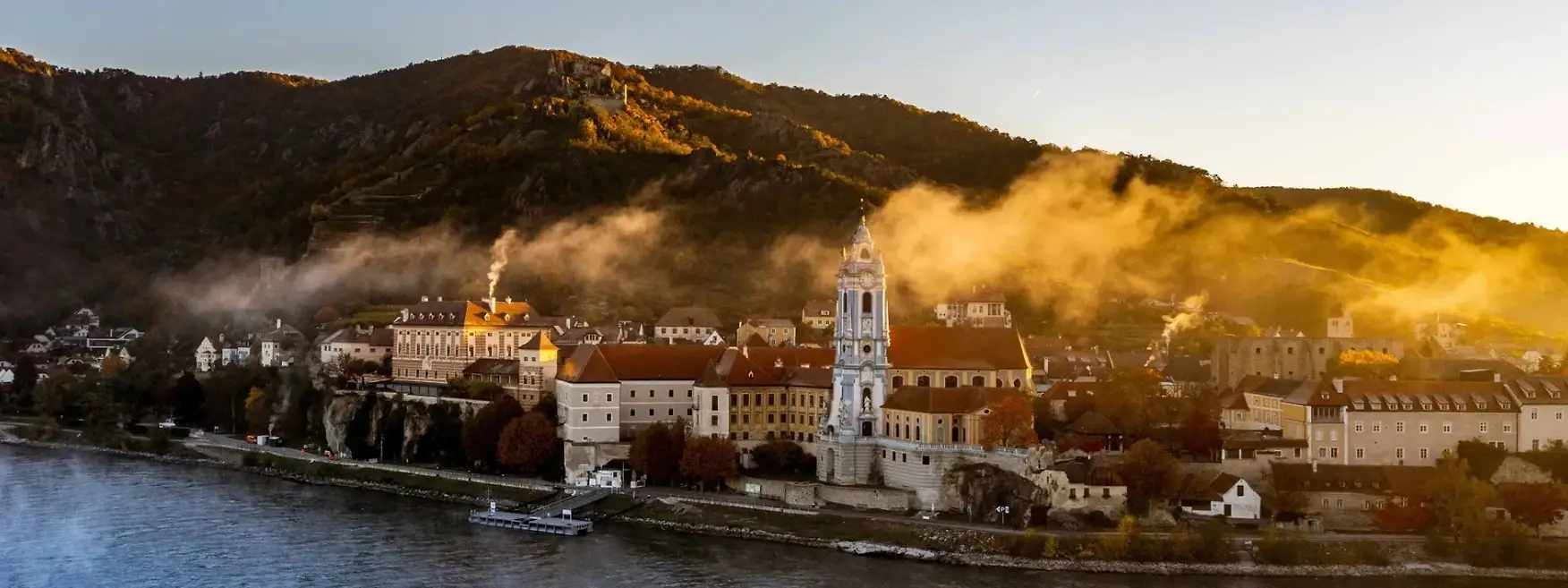
On the Journey from Vienna to Salzburg: Visit Wachau
If you're planning a trip through Central Europe, chances are your itinerary already includes Salzburg and Vienna. Many travelers connect these two cities as part of a longer loop that takes in Munich, Innsbruck, Venice, Budapest or Prague, using Austria as the natural link between the Alps and Central Europe. What fewer travelers realize is that one of the country's most scenic regions lies directly on the way: the Wachau Valley.
While Salzburg combines the magic of The Sound of Music with its stunning mountain views, and Vienna enchants visitors with its rich history and classical music, the Wachau offers a natural spectacle in a class of its own.
Sitting almost exactly halfway between Salzburg and Vienna, the Wachau is a UNESCO World Heritage cultural landscape along the Danube River and it's easy to visit without adding a detour to your route.
The Wachau valley is located between Salzburg and Vienna
Located between Salzburg and Vienna, the Wachau is a UNESCO World Heritage cultural landscape along the Danube, Austria’s main river. Whether you travel by car, train, long-distance bus or ship, the region can easily be included in a journey through Austria and Central Europe.
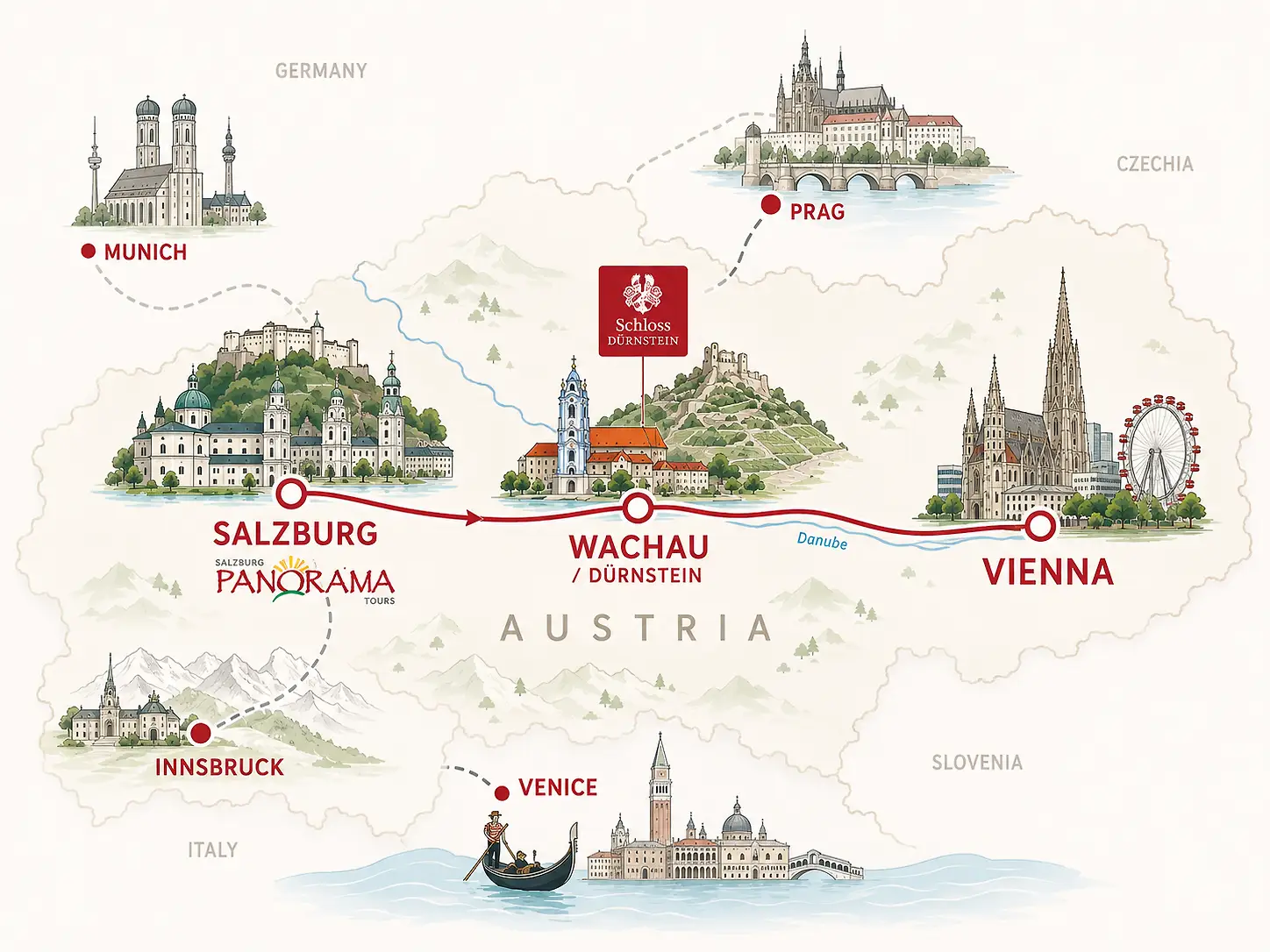
Plan your Route to Wachau from Vienna | Salzburg
The Wachau valley stretches along the Danube between the towns of Melk and Krems, roughly 80 kilometers west of Vienna. For travelers driving by car or taking the train from Salzburg to Vienna, it lies almost directly along the way, making it one of the simplest often overlooked stop and hidden gem to add to your journey through Europe. The same applies if you're arriving from Munich or Innsbruck and continuing east toward Vienna, or even connecting onward to Prague or Budapest.
Public Transportation on the Way
The Wachau is conveniently located along the main travel corridor between Vienna and Salzburg. From Vienna, the region can be reached by train via Krems or Melk, while travelers arriving from Salzburg can take the train toward Melk or continue via St. Pölten and Krems.
Long-distance buses, including selected FlixBus connections, provide another option for traveling between Salzburg, Vienna and nearby transport hubs. During the main travel season, Danube boat services also connect several towns within the Wachau, offering one of the most scenic ways to experience Austria’s main river.
Depending on your itinerary, you can combine train, bus, ship or car travel and turn the journey itself into part of the experience.
By Train
Trains connect Vienna with Krems and Melk, the two main gateways to the Wachau. From Salzburg, travelers can reach Melk directly on selected connections or travel via St. Pölten toward Krems.
By Ship
From spring to autumn, Danube cruises operate between selected Wachau towns such as Melk, Spitz, Dürnstein and Krems. Traveling by ship offers panoramic views of vineyards, historic villages and castle ruins along the river.
By Car
By car, the Wachau can be reached in approximately one hour from Vienna and around two hours from Salzburg. The scenic road between Melk and Krems follows the Danube through the heart of the valley.
By Bus
Long-distance buses such as FlixBus connect Salzburg and Vienna with several cities along the east-west travel route. Regional buses provide onward connections from Krems and Melk to Dürnstein.
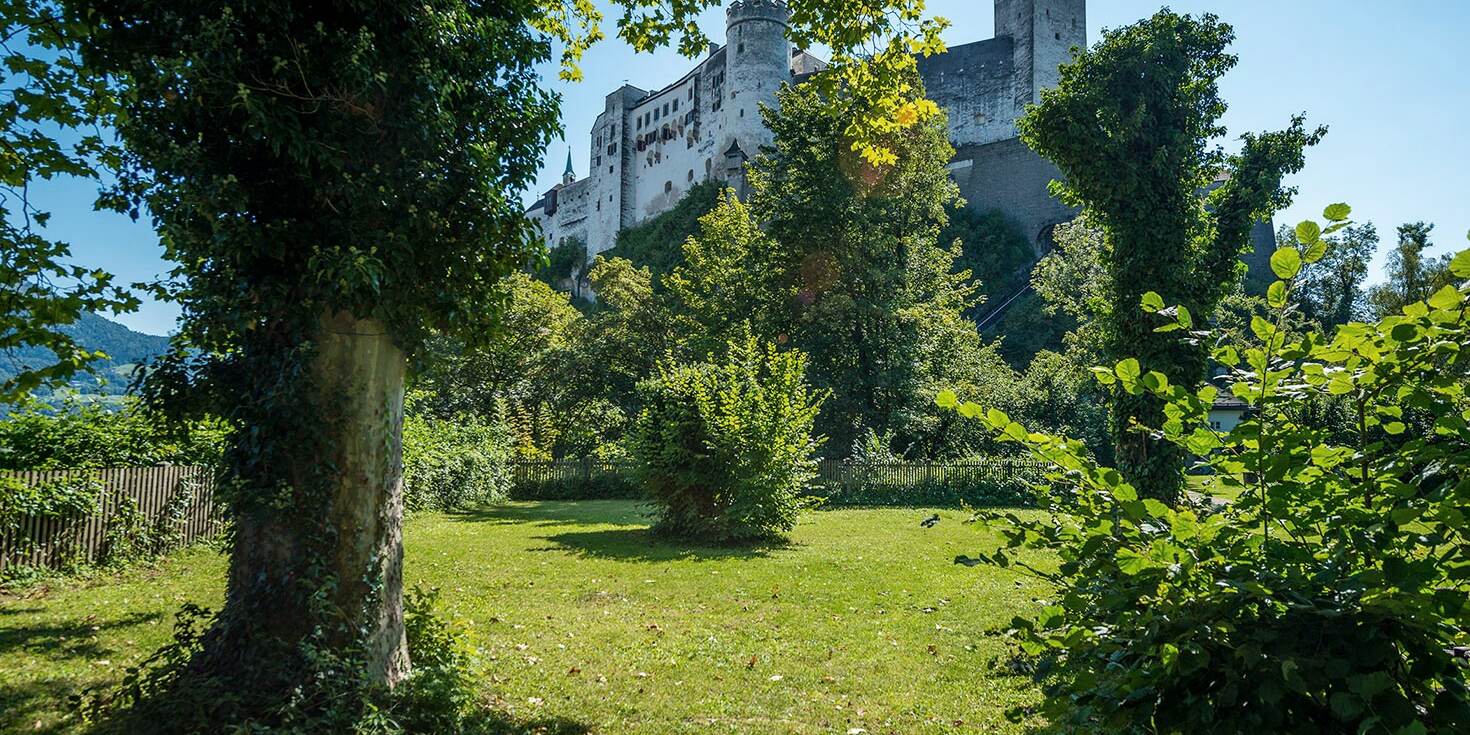
Wachau: A landscape shaped by centuries of wine and fruit growing
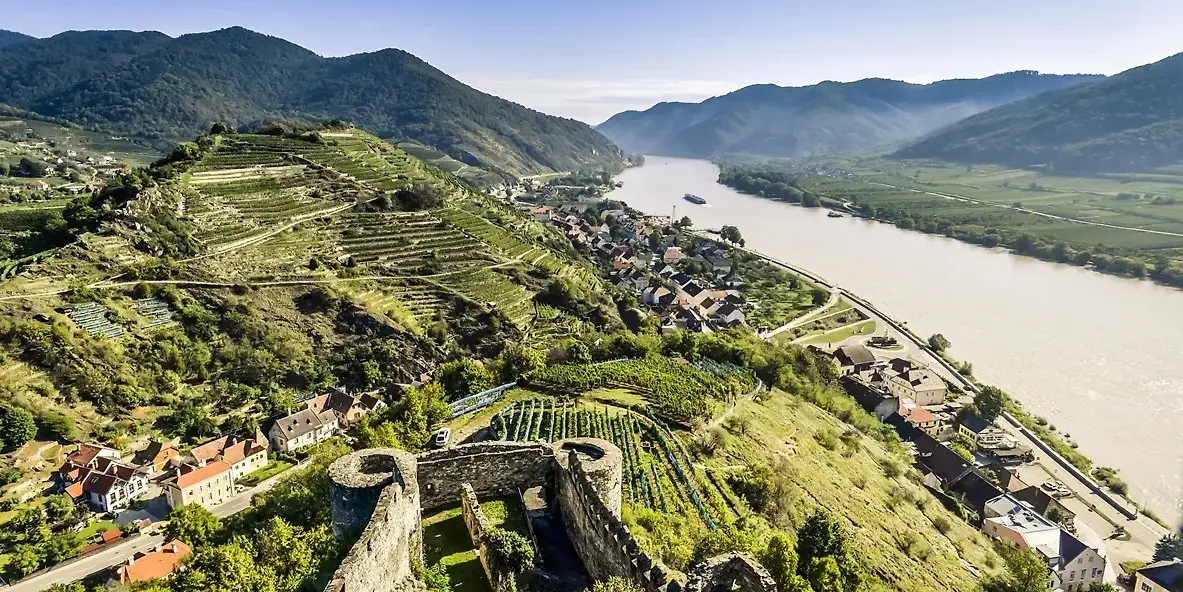
The Wachau is best known for two things: terraced vineyards climbing the hillsides above the Danube, and apricot orchards that have defined the region's identity for generations. The valley's microclimate, warm days, cool river breezes, and rocky soil, makes it one of the few places in Austria where apricots ("Marillen") grow in such concentration and quality.
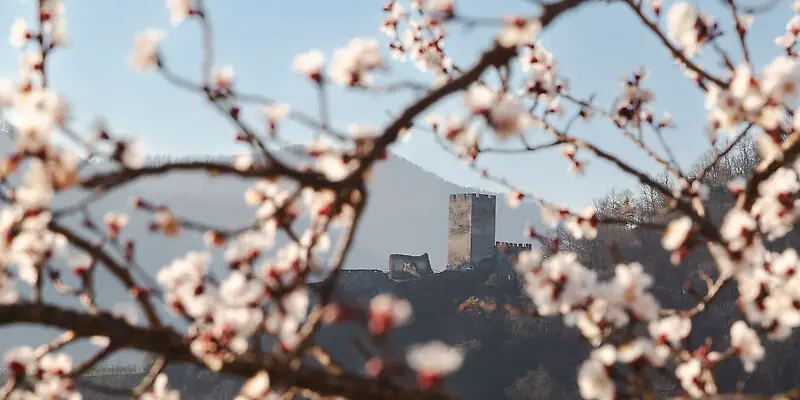
- “Marillenblüte” the apricot blossom in April: Each spring, usually in early-to-mid April, the apricot trees across the Wachau burst into bloom almost simultaneously, covering the hillsides in white and pale pink blossoms. Wachau’s apricot blossom is the European counterpart to Japan's cherry blossom. It's a short window, typically just one to two weeks, but it transforms the entire valley and draws visitors specifically for this natural spectacle.
- “Wachauer Marillenernte” apricot harvest in July: By midsummer, the same orchards are heavy with fruit. Roadside stands, markets, and small producers sell fresh apricots, apricot schnapps, jams, and pastries. It's one of the most tangible ways to experience local agricultural tradition while passing through.
- Riverside towns and dramatic scenery. Villages like Dürnstein are built directly into the hillside, with narrow lanes, historic churches, and Danube views around nearly every corner. Dürnstein in particular is known for the ruins of the castle where Richard the Lionheart was once held captive, a striking reminder of the region's medieval significance perched above the river.
- Melk Abbey: On the western edge of the valley, the Benedictine Abbey of Melk is one of Austria's most impressive Baroque buildings, visible from the Danube long before you reach it.
- Ways to experience it: The Wachau is equally popular for Danube boat cruises, cycling along the riverside paths, hiking through the vineyard terraces, or simply driving the scenic road that hugs the river between Melk and Krems.
Seamless, Stress-Free Logistics: When traveling abroad, time is your most valuable asset. Geographically, the Wachau Valley sits as the perfect stepping stone between the West of Austria and Vienna. Instead of treating your transfer day as lost time spent on a highway or train, this route naturally transforms a simple driving day into an unforgettable highlight of your trip. Leaving Salzburg in the morning allows you to arrive in the Wachau region before continuing to Vienna just in time for lunch.
A Natural Break in the Journey
For travelers covering longer distances, for example from Munich or Innsbruck through Salzburg and on to Vienna, or continuing toward Prague, the Wachau offers a natural pause. A chance to step out of the car or train, walk through a riverside village, and take in one of Austria's most photographed landscapes. Many visitors choose to stay a night here rather than treat it purely as a driving break, using it as a base to explore both the valley and its surrounding hiking and cycling routes.
Among the region's historic places to stay, Hotel Schloss Dürnstein is one of the more outstanding examples, a former baronial residence directly on the Danube River, known for its scenic terrace overlooking the river and the vineyard-covered hills opposite. It's a fitting illustration of how the region invites travelers to slow down for a moment, rather than just pass through.
Add Wachau to your Trip to Europe
Planning a journey between Vienna and Salzburg? Instead of simply traveling from one city to the next, include the Wachau as a memorable stop along the way. Travel by train to Melk or Krems, continue through the valley by regional bus, car or bicycle, or discover the riverside villages on a seasonal Danube cruise.
The Wachau also fits naturally into longer European itineraries connecting Munich, Innsbruck, Venice, Prague or Budapest. Plan your route according to your available time: stop for a few hours, spend a full day exploring the valley or stay overnight directly beside the Danube.